Historic sites around Lake George, NY tell the story of a region that armies fought over for much of the 18th century. The lake sat on a key water route between the Hudson River and Lake Champlain, and during the French and Indian War, Britain and France built forts along the corridor to control it. Today, visitors can walk through a reconstructed British fort, explore a sprawling fortress property near Lake Champlain, visit an island where colonial rangers once camped, and learn how the area grew in the centuries that followed.
French and Indian War Forts on Lake George
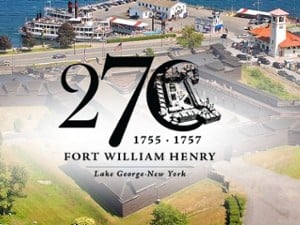
At the southern end of the lake in Lake George Village, Fort William Henry Historic Fortress & Museum recreates the British fort that commanded the area from November 1755 until the siege of August 1757. Costumed interpreters portraying British Regulars, Provincial Troops, and Rangers lead guided tours, and visitors can watch live cannon firings and musket demonstrations or try 18th-century games. Museum exhibits cover the fort and Lake George's role in the war.
Evening Haunted History Ghost Tours run nightly in summer, exploring the documented history and legends tied to the 1757 siege. The fort is open year-round, and its Sutler Shoppe gift shop is open to the public without admission.
Fort Ticonderoga and the Northern End of the Lake
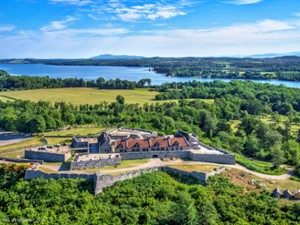
Near the northern end of Lake George and the southern tip of Lake Champlain, Fort Ticonderoga spans a 2,000-acre historic property that played roles in both the French and Indian War and the American Revolution. Daily weapons demonstrations, living history programs, and rotating exhibitions bring the fort's story to life.
The visit extends well beyond the fort walls. Visitors can tour the King's Garden, meet heritage breed animals, and take in views from Mount Defiance. The 75-minute narrated Carillon boat cruise on Lake Champlain covers the lake's maritime history, using sonar to show images of shipwrecks below.
General admission tickets are valid for two consecutive days, which makes it easier to fit it all in.
Rogers Island and Fort Edward
South of Lake George along the Hudson River, Rogers Island Visitors Center in Fort Edward interprets thousands of years of history on and around the island. Permanent exhibits cover the area's earliest known Native American inhabitants, the British fort built there in the 18th century, and Rogers' Rangers, who used the island as a base camp from 1756 until 1759. Exhibits also explore Fort Edward's role in the American Revolution.
The center is open seasonally from May to October, with group tours available by appointment in the off-season.
Local History Museums in Glens Falls
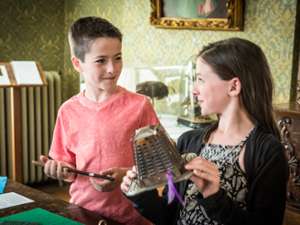
For history beyond the colonial wars, Chapman Museum in downtown Glens Falls focuses on the Glens Falls and Queensbury area. Its exhibits explore everyday hometown life over time, and the collection includes work by 19th-century Adirondack photographer Seneca Ray Stoddard, whose images captured Lake George and the Adirondacks in the late 1800s. The museum also sells regional books and prints.
To round out a history-themed trip, browse more museums in the Lake George area, or dig deeper with the Lake George History Guide.
-article.png)